Verify every output independently.
Code, tests, specifications, findings, and evidence are checked against the claim they make.
Buildfactory applies Sarolta's zero-trust approach to AI-assisted software delivery: probabilistic generation inside a controlled process of specification, tests, review, proof, repair, and human acceptance.
Generative AI is a powerful production input. Like every industrial input, its output must be processed into something fit for purpose. In Buildfactory, the processing is engineering: clarify the request, establish proof, build, check, correct, and accept.
Reliable AI-assisted code is therefore a process-engineering problem—not just a model-selection problem.
Confidence, a completion narrative, or a model reviewing its own work are not proof. The delivery process has to establish what is true.
Code, tests, specifications, findings, and evidence are checked against the claim they make.
When a check can be pass/fail, a deterministic gate owns the decision rather than an LLM score.
Independent challenge catches a specification deviation before it becomes accepted work.
Current artifacts, configured checks, and accountable decisions determine whether a stage may continue.
Buildfactory began with infrastructure deployment, upgrades, repair, and configuration automation. As it was used across real projects, each repeated failure, unsafe handoff, or missing proof became another working control in the delivery base.
Workers, gates, sandboxes, repair paths, and management controls exist because the work required them. See how Buildfactory was built →
Zero trust is not only a security position. It is the reliability boundary between probabilistic generation and the controls that decide what may advance.
A model can produce code, tests, or a completion report that sounds complete while a requirement or integration remains unproven.
Without explicit authority, environment, and stop conditions, an agent can carry work beyond what it was authorized to do.
A visible failure sets back adoption. The controls and evidence need to exist before it reaches production.
These work together. The selected Build Profile determines how deeply each is applied for a delivery.
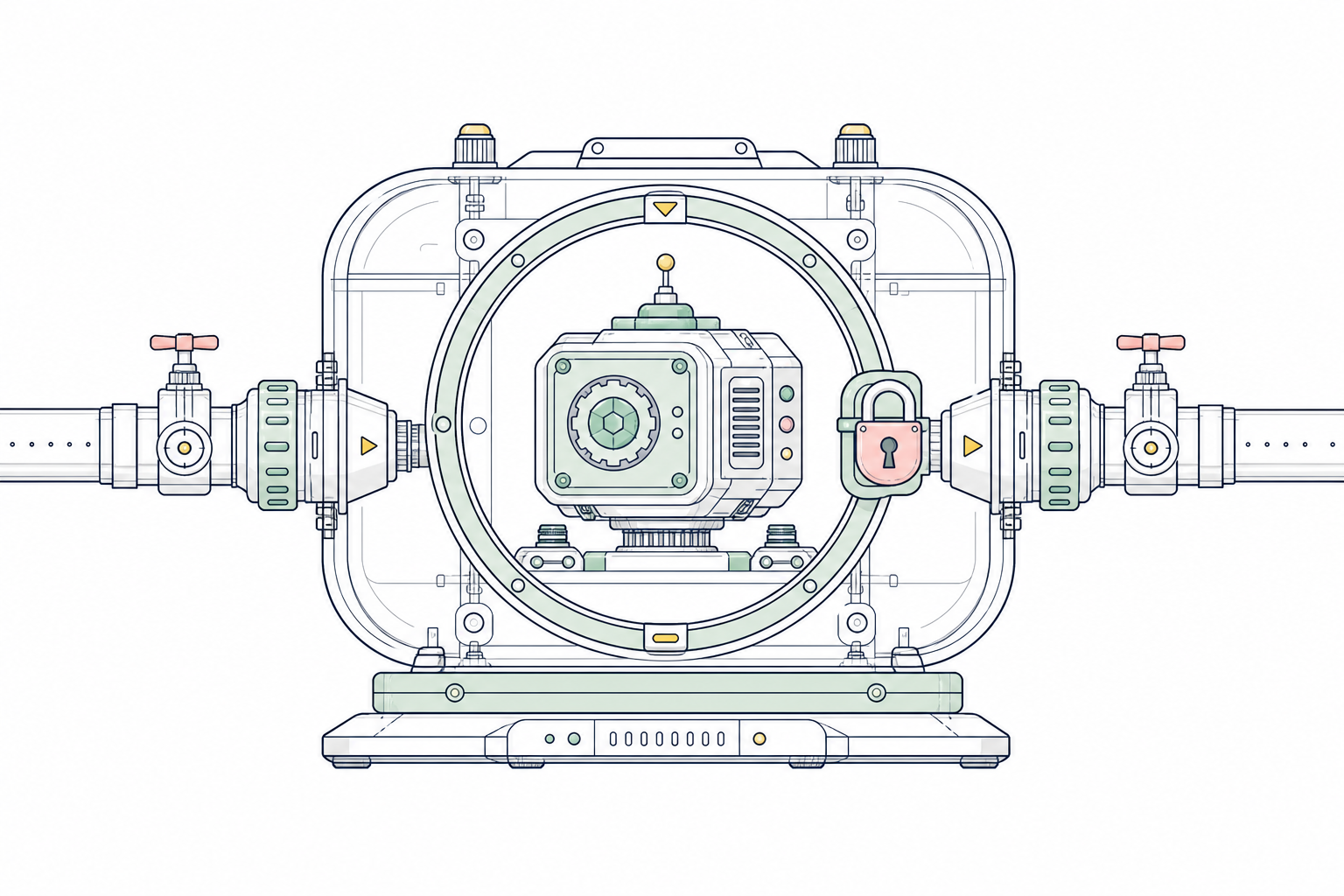 Concept 01
Workers have defined roles, repositories, environments, procedures, and handoffs. A model request does not extend its authority.
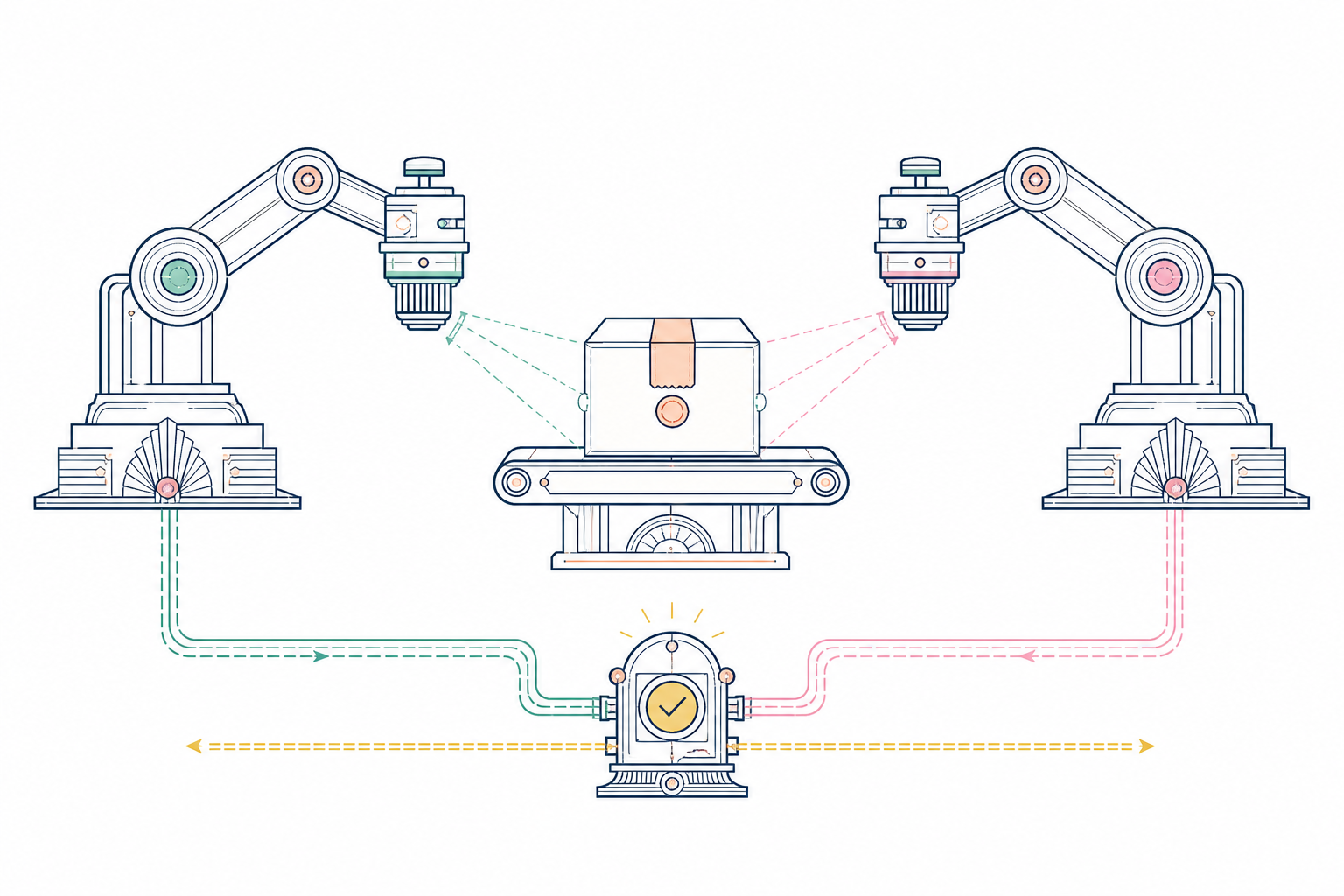 Concept 02
Independent review and inquisitor roles assess work against the specification and evidence, not the producing worker's account.
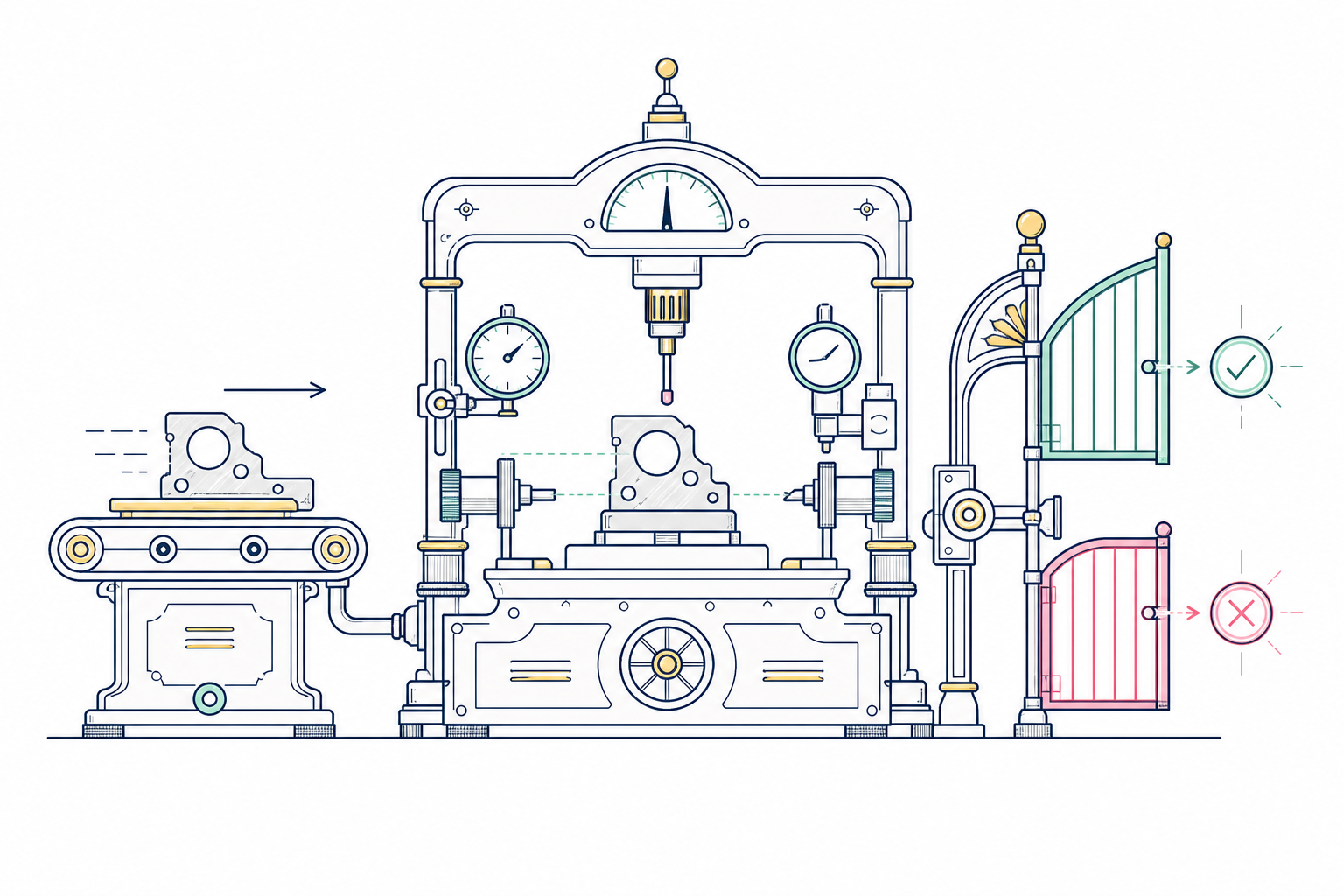 Concept 03
Artifact structure, repository state, tests, coverage, required evidence, and controlled transitions can be verified mechanically.
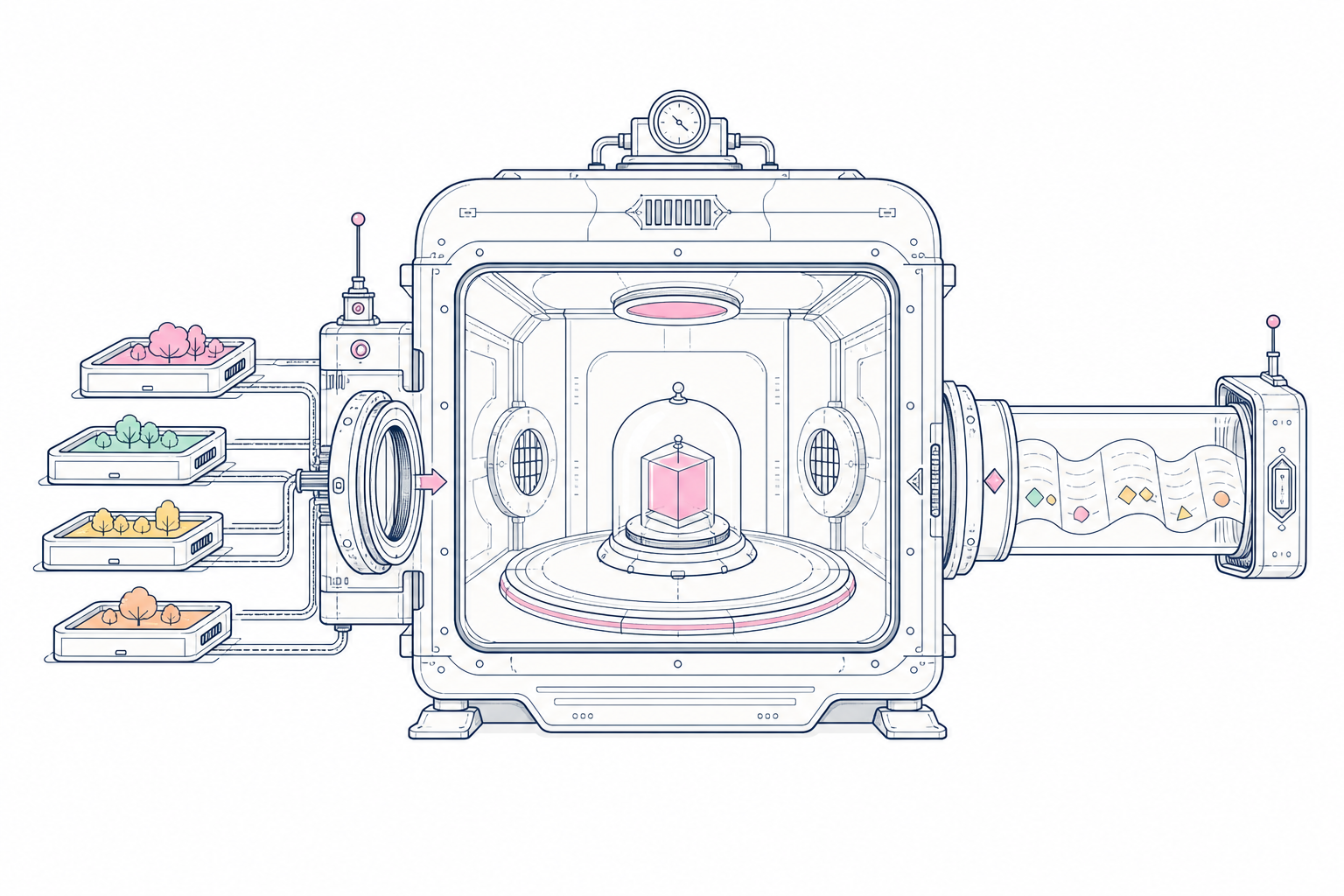 Concept 04
Git worktrees, Docker, Proxmox, and bounded environments isolate work and preserve an accountable run history.
The point is not to slow work down for ceremony. It is to catch the ordinary, plausible failures before they compound.
| Uncontrolled delivery | Buildfactory delivery |
|---|---|
| LLM judges its own output. | Independent review challenges work against its specification and evidence. |
| Tests pass mostly; missing proof is discovered later. | Configured deterministic gates decide whether proof is sufficient to advance. |
| Scope drift emerges during or after release. | Scope is specified, bounded, and checked at major transitions. |
| Failures are reconstructed after the fact. | Artifacts, decisions, evidence, and remediation are retained through the line. |
Buildfactory turns established engineering disciplines into operating machinery for AI-assisted work.
Where a profile requires it, failing tests define the expected behaviour before Code builders implement it.
Progress and release decisions rely on current, traceable evidence—not confidence or a persuasive summary.
Machine-readable specifications connect business intent, workers, tests, review, and the accepted outcome.
Buildfactory does not assume an incoming request is sufficient. PRD analysis and remediation identify missing constraints, unclear behavior, contradictions, and untestable expectations before downstream work compounds the problem.
What runs in each phase depends on the Build Profile and the application. A PoC, an MVP, a SaaS product, and a high-consequence system need different workers, checks, evidence, environments, and human decisions. Some phases can be combined for a bounded product change; others need to be expanded or repeated. The controlled framework keeps the relevant obligations, alignment checks, and remediation paths explicit while allowing the process to fit the product.
Inspect the source request, write actionable deficiencies, apply agreed amendments, and reanalyze before the request is accepted as a build obligation.
Translate the remediated requirement into precise behavior, acceptance criteria, boundaries, and expected proof.
Create tests capable of detecting the requested behavior and distinguish real integration proof from mocks or irrelevant happy paths.
Make the change under the defined specification and test obligation, without silently expanding the scope.
Look for missed obligations, hidden integration effects, weak evidence, and assumptions that a normal phase review did not expose.
Review the resulting behavior against the specification, tests, evidence, and engineering rules, then route any failure to the responsible station.
Confirm that the completed work is usable, fits the surrounding system, and satisfies the human intent behind the requirement.
Decide from the linked requirement, artifacts, reviews, repairs, and outstanding findings—not a worker's declaration of completion.
The pipeline's intelligence is in its structure as well as its models: no stage advances because an agent sounds confident, and no exception is made because of time pressure.
Specification, Test, Code, inquisitor, integration, and acceptance controls return work to the phase that can actually resolve the finding.
Contract verification asks whether defined work, evidence, tests, and engineering rules meet the stated obligation. It is not a free-form hunt for faults. Inquisition is a separate, truth-seeking investigation: it deliberately looks for missing assumptions, weak proof, unintended effects, requirement gaps, and attack paths outside the stated check.
Does the result satisfy the defined requirements, expected evidence, tests, and established engineering rules? A failure must point to the requirement, proof, or rule it does not meet.
Search for attack vectors, fake tests, stale evidence, absent integration, wrong scope, or a conclusion that looks stronger than its proof. This work tests the system's assumptions, not just its checklist.
A requirement, specification, test, implementation, machine-readable output, or process fault needs a different repair path. The finding is not merely recorded; it is routed for correction and re-verification.
Applied indiscriminately, an adversarial pass can become speculative finding churn: it starts treating unlikely concerns as defects or turning ambiguity into unsupported claims. Buildfactory uses it where the consequence justifies the search, gives it a defined question or threat focus, and requires a finding to be tied to evidence, impact, and a decision. That keeps the useful part of adversarial work—finding real holes, weaknesses, and attack paths—without substituting noise for assurance.
Software is the primary domain. The same system applies when an AI step needs stated criteria, evidence, independent review, and a responsible acceptance point.
Transform PRDs into verified code through worker loops, deterministic gates, and evidence.
Check completeness, structure, evidence, and approval criteria before release.
Make sources, method, claims, and conclusions reviewable against a research contract.
Apply factual checks, brand rules, and independent review before publication.
Start from a working system, select the proof required for the work, integrate it with your environment, and keep accountable human judgment where it belongs.